

I believe nothing is impossible when it comes to technology. As rightly quoted “If we did all the things we are capable of, we would astound ourselves” (Thomas A. Edison). In the 90’s people argued that some inventions we now have today were impossible and regarded most of the discussions as fictions, but it’s being proven daily that in the next 20 years all human function might be dependent on Information Technology, except the world ends before then. I believe that the mind of man have not fully used or actualized the peak of its capacity.
Without the conception of an abstract idea, there won’t be a tangible output. It all starts from the mind, and believe you me, anything the mind can conceive is possible. I still stand on the premise that all things are possible to them that BELIEVE. Another important factor to note having studied many great men in the Industry is that they started the journey without knowing the actual end but with strong belief/faith that the dream and vision is worth millions.
The question to answer now is!!
- Do we want this?
- Do we need this?
- What are the positive effects?
- What are the negative effects?
- What does it show us?
- How can we migrate to that future?
Many religious scholars have condemned the use of technology for human advancement, and I’m not of the opinion that they’re wrong because everybody is entitled to his or her opinion. However, the fact still remains: they can’t change the future; rather, people can change themselves, the way they perceive the world, and their perspectives towards tech dynamics. This is clearly recorded in the Holy book (the Bible) as one of the signs of the end times.
Truth be told, we have so many signs regarding the end times. As I continue my discussion, I vividly see a world where there won’t be any need for physically operating computers/machines. History has taught me a lesson: never doubt the possibility of anything. I read about the days of Mainframe Computers where a single computer was contained in a large room. We moved to the era of Minicomputers, where computers were still large but considerably smaller in size. We progressed to the Desktop, Laptop, and Handheld era. Now, what do you think the next in line will be? We see some handheld computers that are as slim as a broom. I tell you the truth, and I believe it 100%: the era of Airtop computers is coming, where there won’t be a need to hold the computers with physical hands. The computer can be held up by a force greater than the magnetic force. We normally believe that “what goes up must surely come down,” but scientists have gone back to work to explore the possibility of making what goes up stay up; a technology I believe was used by those exploring the moon.
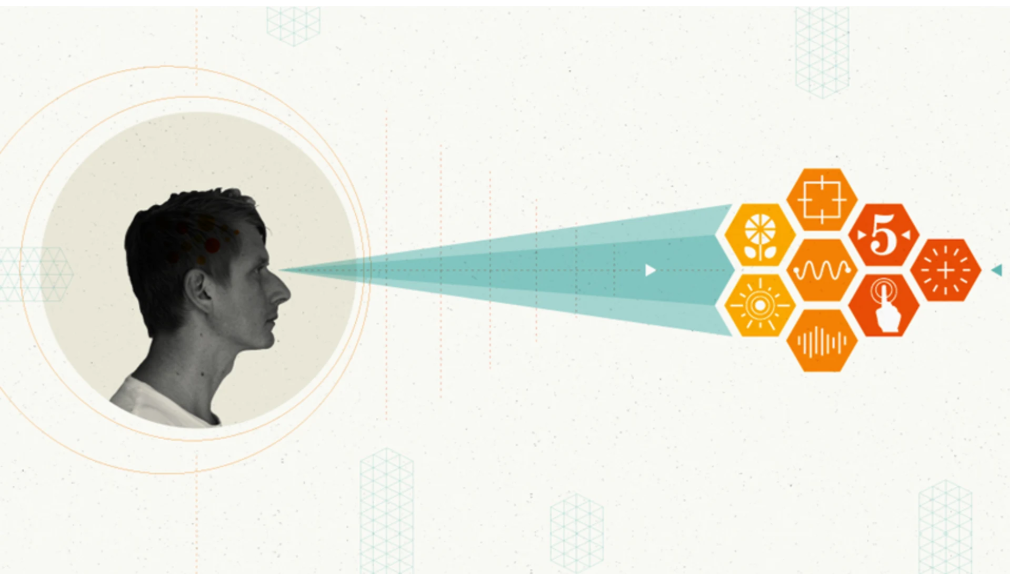
The next 20 years are poised to be revolutionary, particularly in the programming and communication. I envision a future where traditional devices, like cell phones, will no longer be necessary. Instead, we might see a world where communication occurs through advanced technologies embedded directly within the human. Imagine a scenario where individuals rely on chips or signals implanted in their brains, enabling them to interact seamlessly with others without the need for physical devices.
For instance, when Mr. A wishes to connect with Mr. B, he simply thinks of Mr. B. This thought is transmitted through an intricate network of neural signals that Mr. B’s brain can interpret. Such technology would facilitate instant communication, allowing for conversations to occur in a mental space, devoid of language barriers or misunderstandings that often accompany verbal communication. Mr. B would receive an intuitive signal—a gentle vibration or pulse of thought—that alerts him to Mr. A’s intention to communicate. In this context, discussions would be a reflection of deeper thought processes rather than mere spoken words. The technology could analyze and measure thought patterns, accurately capturing the essence of what one intends to convey. This would move beyond simple phrases, enabling nuances of meaning, emotions, and intentions to be shared more fully and openly.
As I ponder these advancements, I find myself questioning how they will shape our interactions and relationships. How will our understanding of privacy change if our thoughts can be accessed so easily? What ethical implications will arise from technologies that can read or interpret thoughts?
I invite insights from all walks of life. Consider perspectives beyond technology—such as religion, societal values, medicine, and inventions. How will these revolutions in communication and technology influence our culture, our values, and our very understanding of what it means to be human?
